
Sunday, September 27, 2026

Gold Fields Ends Mining at Ghana's Damang Site as Ore Reserves Deplete

Gold Fields halted mining at its Damang operation in Ghana in early 2025, shifting to stockpile processing only as ore reserves fell below economic thresholds. The move reduces Ghana's active gold production capacity even as prices exceed $2,800 per ounce. The transition reflects broader mine depletion dynamics facing aging gold operations globally.

ViaNews Editorial Team

February 25, 2026

Gold Fields Ends Mining at Ghana's Damang Site as Ore Reserves Deplete
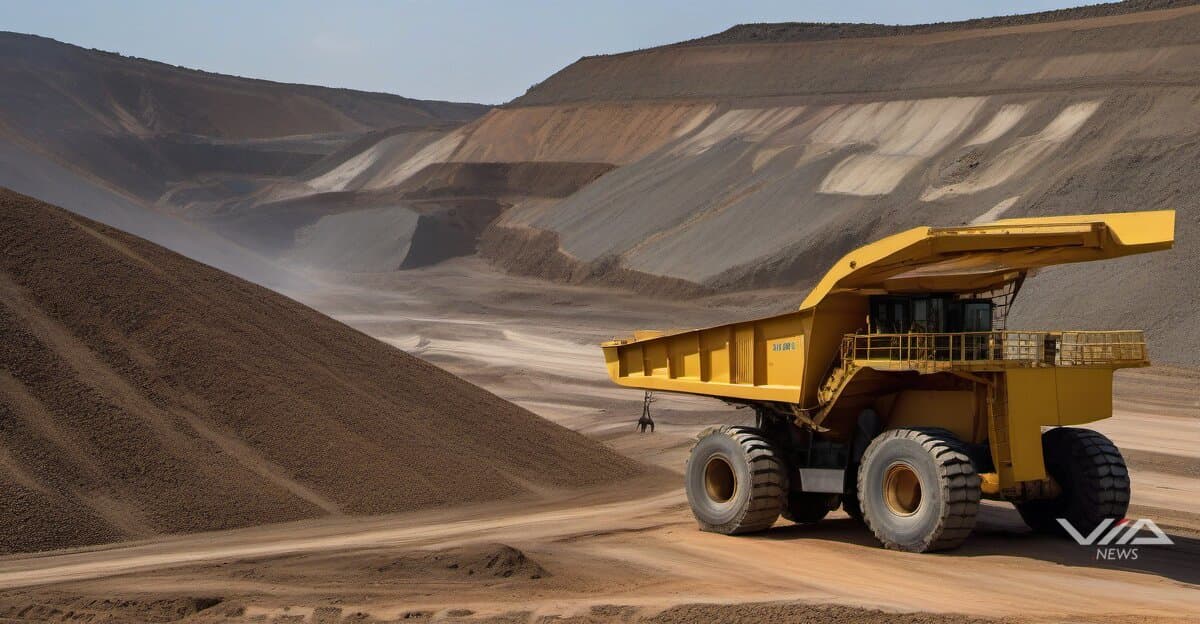
Image generated by AI for illustrative purposes. Not actual footage or photography from the reported events.

Gold Fields stopped mining at Damang in Ghana in early 2025, moving the site to stockpile processing only. The shift signals ore body exhaustion at the mine, removing active production capacity from Ghana's gold belt.

Ghana ranks as Africa's top gold producer alongside South Africa, with mining generating substantial export revenue. Damang's transition to processing existing stockpiles reduces the country's active mining base as global gold prices hover above $2,800 per ounce—near record highs.

The decision to halt mining despite favorable prices indicates reserves fell below economic viability thresholds. Stockpile processing employs fewer workers than active mining, affecting local communities dependent on mine employment and economic activity.

Gold Fields operates mines across four continents, including South Deep in South Africa, operations in Australia's Eastern Goldfields, and assets in Peru. The company is reallocating capital toward higher-grade deposits as Damang winds down.

Mine depletion affects production profiles across the global gold sector. Companies must replace exhausted reserves through exploration or acquisitions, both capital-intensive. Rising gold prices can extend mine life by making lower-grade ore economic, but Damang's reserves apparently fell too far even in the current price environment.

For investors tracking gold equities, the operational change will reduce Gold Fields' production guidance in coming quarters as stockpiles deplete. The broader sector faces similar dynamics at aging mines worldwide, where reserve replacement determines long-term production trajectories and valuations.

Ghana's mining sector contributed approximately 40% of merchandise exports in recent years. Damang's transition marks another aging operation exiting active production in West Africa's gold belt, which has supplied global markets for over a century.


Sources:
1 News Report, "Ghana assesses bids for $1B revival of Damang mine seized from Gold Fields" (March 17, 2026)
2 Yahoo Finance, "Gold Fields H2 Earnings Call Highlights" (February 23, 2026)
3 Yahoo Finance, "Gold Fields Ltd (GFI) Q4 2025 Earnings Call Highlights: Record Production and Robust Financial ..." (February 21, 2026)
4 Globe Newswire, "Lingerie Fighting Championships To Hold LFC48: Gators & Garters at The Florida Man Games" (February 04, 2026)

What we know · the intelligence behind this page
Live from the substrate
What we're seeing
Vertical AI Agents Attract a Funding Wave Across Fintech-Adjacent Industries
A cluster of AI-native startups applying autonomous agents to narrow, operational problems — hotel front-desk staffing (Dextr AI), identity/fraud risk for financial institutions (Baselayer), insurance distribution (Napo, Connie Health, MGT Insurance) — closed seed-to-Series A rounds within days of each other in September 2026, with CB Insights running a coordinated CEO interview series to spotlight them. The pattern points to agentic AI maturing from generic chat tools into vertical, revenue-generating products, with identity verification for AI agents themselves (Baselayer) emerging as a new fintech infrastructure category responding directly to AI-driven fraud risk.
Our read on the data ›
Signals we're tracking
Satellite-Terrestrial Network Integration Acceleration
Increased investment and launches in hybrid satellite-cellular networks across telecom industry; competitive responses from other carriers; regulatory activity around satellite spectrum; expansion of emergency/rural connectivity use cases
Patterns we're watching ›
Where sources disagree
ING Group
Both facts record the same metric (shares_outstanding) for ING Group at the identical observation date (2025-12-31). FACT A states 2,902,437,688 shares; FACT B states 2,902 million shares (2,902,000,000). The difference is 437,688 shares (~0.015%). This is a genuine value conflict, though the discrepancy appears to result from FACT B rounding to the nearest million while FACT A provides the precise count.
We flag conflicts openly ›
Recently verified
✓ Checked against the original source
4,984
facts traced to their source — and we flag the ones that don't hold up.
101 entities tracked4,984 facts checked against source5,306 source documents archived
Query this data → isubstrate.com