
Sunday, September 27, 2026

Generation Mining burns through cash as Canada's Marathon copper project stalls amid global financing crunch

Generation Mining Limited faces a critical liquidity crisis as the Toronto-based developer depletes working capital before production starts at its Marathon copper-palladium project in Ontario. The company needs $50-100 million bridge financing within 6-9 months, reflecting a broader capital drought hitting junior miners worldwide as investors retreat from pre-production projects.

Generation Mining burns through cash as Canada's Marathon copper project stalls amid global financing crunch
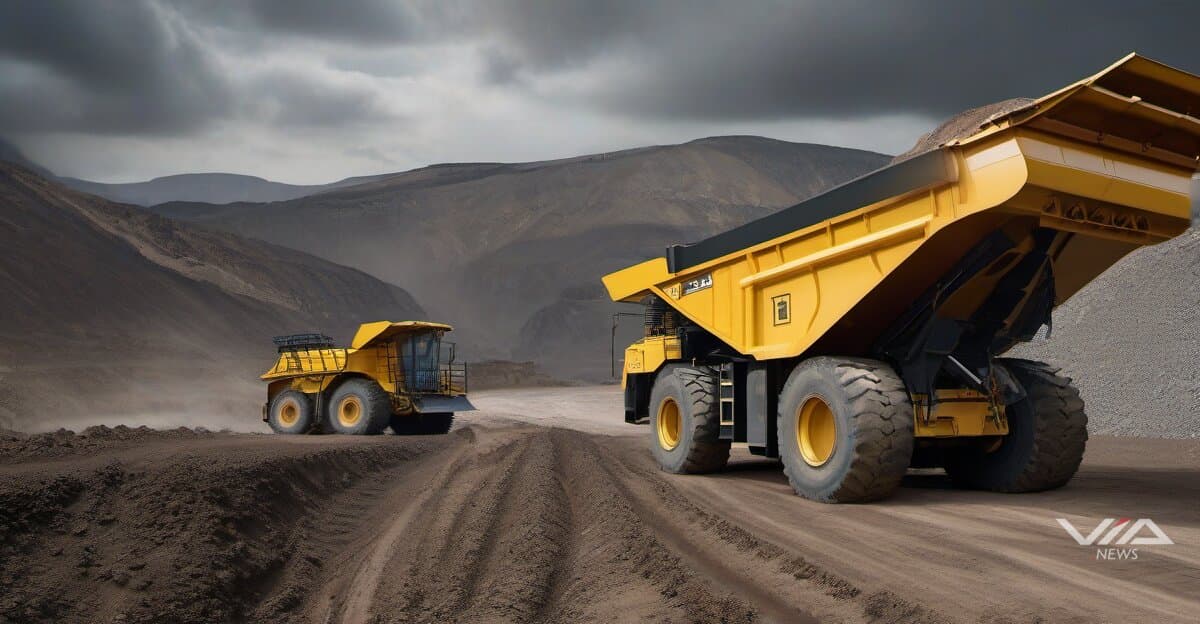
Image generated by AI for illustrative purposes. Not actual footage or photography from the reported events.

Generation Mining Limited is running out of cash before its Marathon copper-palladium deposit in Northwestern Ontario reaches production. The Toronto-based developer operates at zero revenue while burning through working capital, with risk models showing 70% confidence in medium-likelihood financial collapse without immediate capital injection.

The crisis mirrors a global pattern. Junior mining companies worldwide face 23% failure rates between feasibility studies and production as capital markets tighten. Going concern warnings in mining development typically surface 12-18 months before insolvency, leaving Generation Mining a narrow window to secure funding.

Marathon represents one of Canada's largest undeveloped copper-palladium deposits. Global copper demand projections show a 40% supply deficit by 2030 driven by electrification and grid infrastructure buildouts across Asia, Europe and North America. Project economics remain sound despite the immediate cash crunch.

Generation Mining needs an estimated $50-100 million bridge financing based on typical pre-production burn rates. Options include offtake agreements with industrial buyers, streaming deals with precious metal purchasers, or joint ventures with major mining operators. Stock price declines compound the problem—equity raises at distressed valuations trigger shareholder dilution exceeding 50%.

Palladium market dynamics complicate financing. Prices dropped 45% from 2022 peaks as automotive catalytic converter demand declined globally. Copper exposure provides a hedge, but dual-metal economics make investor pitches harder.

The liquidity crisis extends beyond Generation Mining. Junior mining stocks trade at 15-year lows as fund managers cut exposure to development-stage projects lacking 24-month cash runways. The 2024-2025 commodity market volatility reduced debt financing options for pre-revenue miners worldwide.

Marathon's technical merit remains intact. The crisis reflects capital markets dysfunction rather than asset deterioration. Management has 6-9 months to execute financing before the going concern becomes acute. Resolution will signal whether global mining finance markets can still support strategic copper projects ahead of the 2030 supply crunch.

What we know · the intelligence behind this page
Live from the substrate
What we're seeing
Vertical AI Agents Attract a Funding Wave Across Fintech-Adjacent Industries
A cluster of AI-native startups applying autonomous agents to narrow, operational problems — hotel front-desk staffing (Dextr AI), identity/fraud risk for financial institutions (Baselayer), insurance distribution (Napo, Connie Health, MGT Insurance) — closed seed-to-Series A rounds within days of each other in September 2026, with CB Insights running a coordinated CEO interview series to spotlight them. The pattern points to agentic AI maturing from generic chat tools into vertical, revenue-generating products, with identity verification for AI agents themselves (Baselayer) emerging as a new fintech infrastructure category responding directly to AI-driven fraud risk.
Our read on the data ›
Signals we're tracking
Satellite-Terrestrial Network Integration Acceleration
Increased investment and launches in hybrid satellite-cellular networks across telecom industry; competitive responses from other carriers; regulatory activity around satellite spectrum; expansion of emergency/rural connectivity use cases
Patterns we're watching ›
Where sources disagree
ING Group
Both facts record the same metric (shares_outstanding) for ING Group at the identical observation date (2025-12-31). FACT A states 2,902,437,688 shares; FACT B states 2,902 million shares (2,902,000,000). The difference is 437,688 shares (~0.015%). This is a genuine value conflict, though the discrepancy appears to result from FACT B rounding to the nearest million while FACT A provides the precise count.
We flag conflicts openly ›
Recently verified
✓ Checked against the original source
4,984
facts traced to their source — and we flag the ones that don't hold up.
101 entities tracked4,984 facts checked against source5,306 source documents archived
Query this data → isubstrate.com