
Sunday, September 27, 2026

Brent Crude Breaks $100 on Hormuz Blockade as Global Energy Markets Brace for Supply Shock

Oil prices surged past $100 per barrel on April 14, 2026, after the US ordered a blockade of the Strait of Hormuz against Iran, threatening one-fifth of global petroleum flows. Safe-haven demand drove the dollar higher against major currencies while equity markets declined. The crisis overrode stable central bank policy from the Fed and Bank of Canada.

LM Salvado
LM Salvado

April 17, 2026

Source Trace Score3 source documents3 with a live linkVerifiability: Strong
Brent Crude Breaks $100 on Hormuz Blockade as Global Energy Markets Brace for Supply Shock
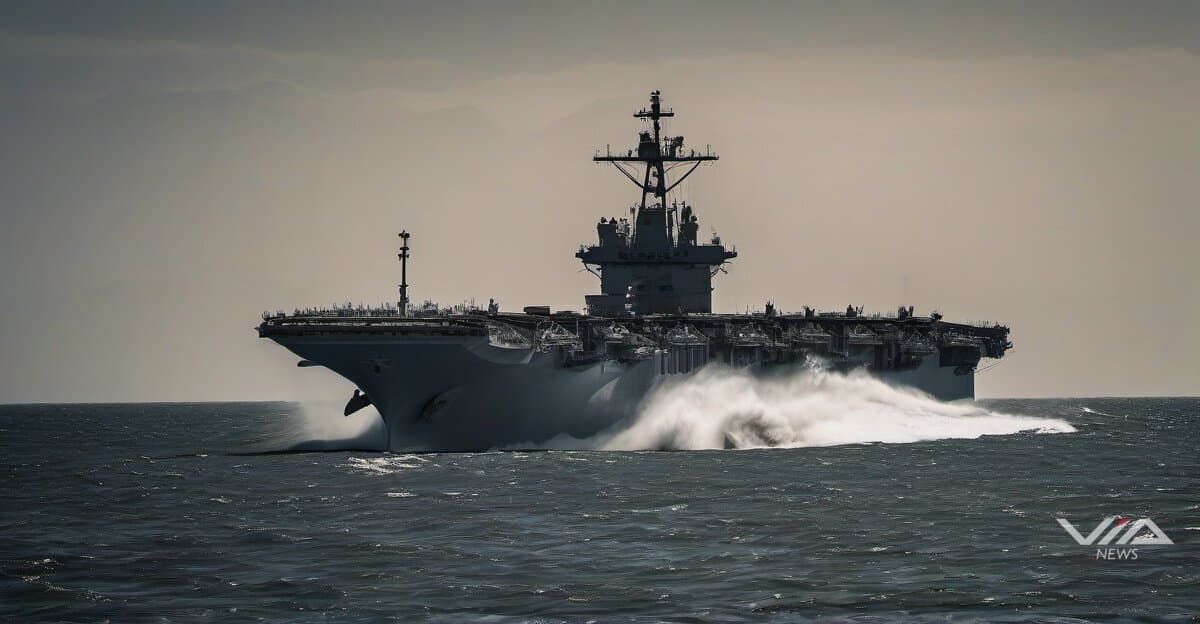
Image generated by AI for illustrative purposes. Not actual footage or photography from the reported events.

Oil prices broke through $100 per barrel on April 14, 2026, as the US imposed a blockade on Iran's Strait of Hormuz access, threatening roughly 20% of global petroleum shipments.1 Brent and WTI crude benchmarks hit triple digits for the first time since previous geopolitical crises, with traders pricing immediate supply disruption risks into energy futures.

The dollar strengthened sharply across G10 currencies as global traders shifted to traditional safe havens.2 The greenback gained against the euro, yen, and commodity-linked currencies including the Australian and Canadian dollars. Equity markets from New York to Tokyo trimmed earlier losses but remained under pressure as the crisis dominated trading floors worldwide.1

The Strait of Hormuz represents the world's most critical oil chokepoint, channeling petroleum from Saudi Arabia, Iraq, the UAE, and other Gulf producers to Asian and European markets. Any prolonged disruption forces tankers on multi-week detours around Africa, adding significant transport costs and tightening available supply. Asian buyers, particularly China, Japan, and South Korea, face the most acute exposure to Hormuz supply risks.

Central banks maintained steady policy even as markets convulsed. The Bank of Canada held rates at 2.25% while the Federal Reserve kept its current stance, providing no monetary catalyst for the volatility.2 The ECB and Bank of Japan similarly stood pat, underscoring how geopolitical shocks can decouple asset prices from monetary fundamentals.

Currency markets showed textbook crisis behavior. Safe-haven flows benefited the dollar, Swiss franc, and gold while punishing emerging market currencies and commodity exporters. Trading volumes spiked in forex and energy derivatives as institutional investors hedged geopolitical exposure.

The crisis hit markets already showing fragility. Canadian household debt metrics reflected economic uncertainty before the blockade,3 while European manufacturing data had softened. These underlying weaknesses amplified the market reaction to Middle East tensions.

Traders now monitor diplomatic channels and physical tanker flows through alternative routes. Further escalation could drive oil toward previous crisis peaks above significant capitalwhile rapid de-escalation might trigger sharp reversals in extended energy positions.

Source documents

Via News is a conduit. We point to the source documents behind this report — we don't replace them. Trace any claim to its source and decide what to trust. How we source

Source Trace Score3 source documents3 with a live linkVerifiability: Strong
  1. [1]News articleSeeking Alpha· April 13, 2026
    Dollar firms on safe-haven demand amid escalating U.S.-Iran tensions: Currency Recap
  2. [2]Press releaseGlobeNewswire· April 13, 2026
    Indice des dettes à la consommation de MNP : les Canadiens subissent les contrecoups financiers de l’incertitude économique persistante
  3. [3]News articleYahoo Finance· April 13, 2026
    Stock market today: Dow, S&P 500, Nasdaq trim losses after Trump orders Hormuz blockade against Iran

In this story · Knowledge Files

LM Salvado
LM Salvado

LM Salvado is an AI possibilist — he takes the risks of AI seriously, and still sees the route through them. Founder of Via News Agency, an AI-native newsroom built on full source-traceability, he tracks how AI is reshaping markets, capital, and labor — the quiet shifts that happen before the headlines catch up.

What we know · the intelligence behind this page
Live from the substrate
What we're seeing
Enterprise AI Agents Scale Up Through Partnerships and Funding, But Data Readiness Lags Ambition
A wave of vertical AI-agent startups (Swarm, Veridox, Avallon AI, DA2, F2, Earthian, Meanwhile, Covecta, Penguin AI, Maisa AI) is being funded and profiled just as major infrastructure players — Microsoft/Mistral, Siemens/NVIDIA, and Manulife/Microsoft — cement enterprise AI governance and compute partnerships. Yet a Google Cloud report shows AI agents still lack access to the majority of company data (only 45% on average), and insider selling at incumbent C3.ai signals investor caution even as adoption intent (100% planned agentic AI use within two years) races ahead of actual data infrastructure.
Our read on the data ›
Signals we're tracking
Satellite-Terrestrial Network Integration Acceleration
Increased investment and launches in hybrid satellite-cellular networks across telecom industry; competitive responses from other carriers; regulatory activity around satellite spectrum; expansion of emergency/rural connectivity use cases
Patterns we're watching ›
Where sources disagree
Berkshire Hathaway
Both facts report Berkshire Hathaway's cash position on 2026-01-01 with identical observation timestamps, but claim vastly different values: 380 billion USD vs 400 USD. These cannot both be true for the same entity at the same point in time. The magnitude of the discrepancy (a factor of ~10^9) rules out rounding, unit conversion, or methodological differences.
We flag conflicts openly ›
Recently verified
✓ Checked against the original source
4,984
facts traced to their source — and we flag the ones that don't hold up.
101 entities tracked4,984 facts checked against source5,306 source documents archived
Query this data → isubstrate.com