

Sunday, September 27, 2026

AI Replacing Teachers Will Have Dire Consequences

Elham P.Mohammadi

June 29, 2020

Photo by Franck V. on Unsplash

As technology is taking giant leaps and bounds, artificial intelligence is sweeping aside old notions of education and human tutors are expected to be sidelined soon.

There are many advocates of replacing teachers with AI machines, but Jesper Tække, a Denmark-based university professor, argues that handing over the job of instilling knowledge into young minds to robots will have adverse implications.

Jesper, who has a Ph.D. in media sociography from the IT University of Copenhagen, works at the Centre for Internet Research at the School of Communication and Culture of Aarhus University.
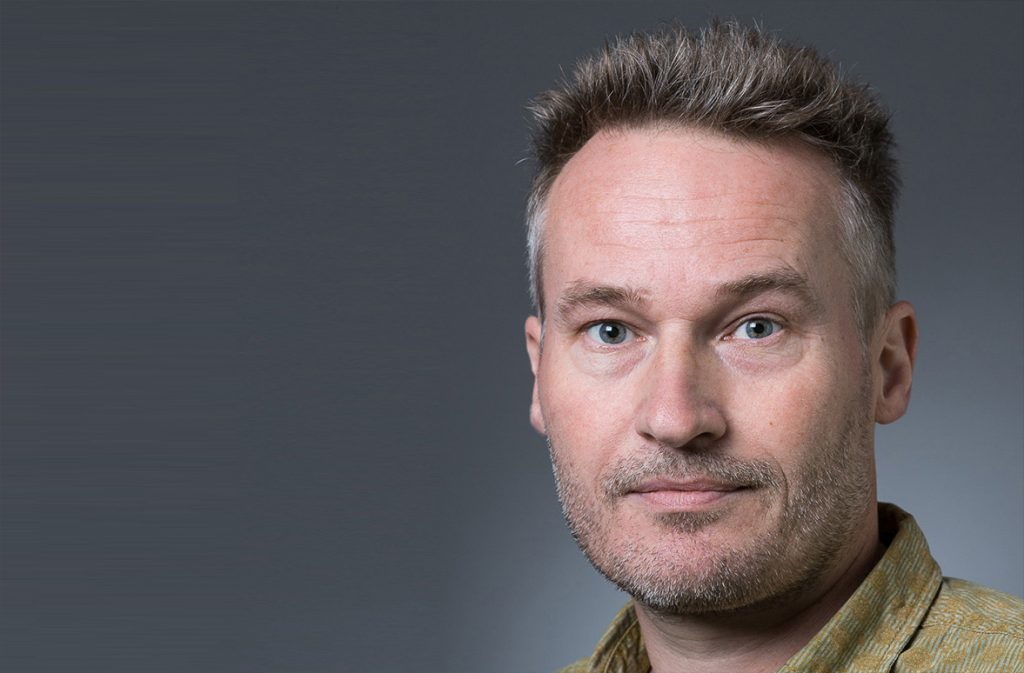
Jesper Tække, an associate professor (Ph.D.) at Aarhus University, Denmark (Photo credit: Aarhus University)

In an interview with Via News, he said the world is witnessing a huge rise in using big data and profiling students.

"Students are being treated like trivial machines," the researcher said, adding that AI should be used only as an assistant and a learning tool.

"AI can help teachers but it is now being used to, for example, read face expressions to figure out if the student is having the 'right' attitude toward the school system and the teacher. It is really scary."

He was referring to the fact that facial recognition technology is being used in some schools in China to monitor how attentive students are in class. The use of this technology is also fast becoming a reality in US schools.

Proponents says facial recognition can enhance the learning experience and serve as a crucial crime-fighting tool, while opponents cite privacy and bias concerns.  

Read more: VR Telehealth Solutions to Boom in Post-Coronavirus World: Virtuleap’s CEO

Jesper believes it is a matter of regret that the coronavirus pandemic is being exploited by some large companies around the world to advance their agendas in the field of education.

The ultimate goal of education is to help people think critically and decide for themselves, he said, adding that a machine should not be allowed to make decisions for people.

"We really like the smart media, but we do not like to be profiled and just have artificial intelligence machines as our teachers. They can help us teach better, but we should not let them play the main role of teaching. We want a human teacher to be there with students," he said, expressing the view of like-minded academics.

https://www.youtube.com/watch?v=YyWzQXTrrZs
What we know · the intelligence behind this page
Live from the substrate
What we're seeing
Vertical AI Agents Attract a Funding Wave Across Fintech-Adjacent Industries
A cluster of AI-native startups applying autonomous agents to narrow, operational problems — hotel front-desk staffing (Dextr AI), identity/fraud risk for financial institutions (Baselayer), insurance distribution (Napo, Connie Health, MGT Insurance) — closed seed-to-Series A rounds within days of each other in September 2026, with CB Insights running a coordinated CEO interview series to spotlight them. The pattern points to agentic AI maturing from generic chat tools into vertical, revenue-generating products, with identity verification for AI agents themselves (Baselayer) emerging as a new fintech infrastructure category responding directly to AI-driven fraud risk.
Our read on the data ›
Signals we're tracking
Satellite-Terrestrial Network Integration Acceleration
Increased investment and launches in hybrid satellite-cellular networks across telecom industry; competitive responses from other carriers; regulatory activity around satellite spectrum; expansion of emergency/rural connectivity use cases
Patterns we're watching ›
Where sources disagree
ING Group
Both facts record the same metric (shares_outstanding) for ING Group at the identical observation date (2025-12-31). FACT A states 2,902,437,688 shares; FACT B states 2,902 million shares (2,902,000,000). The difference is 437,688 shares (~0.015%). This is a genuine value conflict, though the discrepancy appears to result from FACT B rounding to the nearest million while FACT A provides the precise count.
We flag conflicts openly ›
Recently verified
✓ Checked against the original source
4,984
facts traced to their source — and we flag the ones that don't hold up.
101 entities tracked4,984 facts checked against source5,306 source documents archived
Query this data → isubstrate.com