
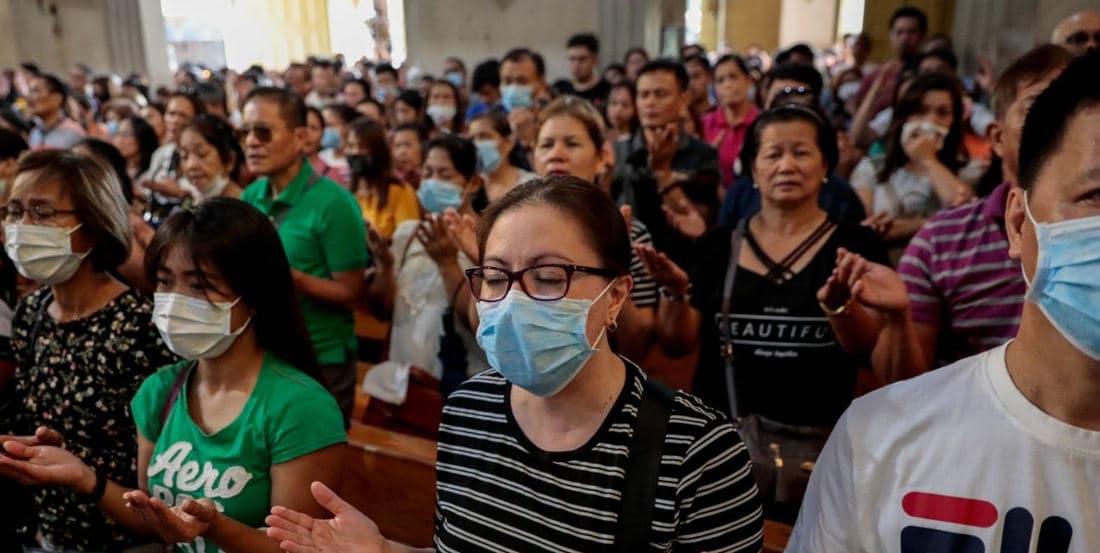
MANILA, Philippines (Via News) – Considered as the “worst shock” to the Philippine economy since the global crisis a decade ago, the economy here is set to suffer more disruptive impacts as its central bank foresees a massive slowdown in its economic growth as the country continues to combat the spread of COVID-19.
The government of this archipelagic country has imposed a lockdown in the whole of its biggest island – Luzon, where its capital Manila and its neighboring well-off cities are to be found. This, its central bank said, “could further dampen domestic economic activity."
As of this writing, the health department here has reported at least 2084 confirmed cases, with death toll pegged at 88. Critics have been demanding mass testing but the Philippine government remains adamant on pursuing a militarist approach by deploying military and police forces on the ground to supposedly keep peace and order amid the so-called enhanced community quarantine.
Globally, governments are working hard to mitigate the impacts of COVID-19 on their respective economies – with a former White House adviser saying that the “near standstill” economy, particularly in the US, may lead to a repeat of the Great Depression.
This will likely hurt smaller economies like the Philippines even more.
No less than the head of the Philippines’ finance department said in news reports that the government is likely to get a $1.8 million decrease in its tax collections. Still, he said the massive infrastructure spending – the cornerstone of the Duterte administration’s economic program – will continue despite critics saying that the country’s economic growth has been at its slowest in the past years.
Before the COVID-19, independent thinktank Ibon Foundation has long said that the continuing neglect of the country’s manufacturing and agriculture sector is behind the slow economic growth in the country. Citing government data, the group noted that the annual job generation, too, is considered as “lowest” in six decades, with only 81,000 in 2017.
On the ground, Ibon Foundation said the impacts of COVID-19 will likely affect at least 14 million families, who mostly have low income and “little savings if any.” The group estimates that about 5.2 million of these households “face the greatest difficulties amid the lockdown and severe disruption to their mobility and economic activity.”
So far, the Philippine government’s economic relief offered is a P27.1-billion response fund, the majority of which will be allocated to boost the tourism industry.
Meanwhile, the Philippine central bank is optimistic that the economy may be able to bounce back by 2021.