

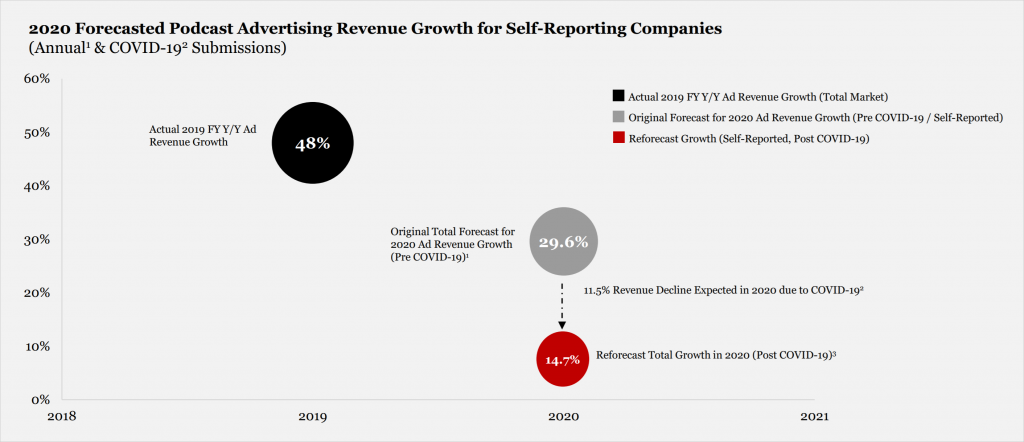
U.S. podcast advertising revenue is expected to grow 14.7% in 2020 and is forecast to generate nearly $1 billion by year's end, according to a new study of the U.S. podcasting sector.
The industry was projected to grow as much as 29.6% this year before the coronavirus pandemic, reads the fourth annual Interactive Advertising Bureau Podcast Ad Revenue Report prepared by PwC.
IAB, in its own words, empowers the media and marketing industries to thrive in the digital economy.
Its membership is comprised of more than 650 leading media companies, brands, and technology firms responsible for selling, delivering, and optimizing digital ad marketing campaigns.
The IAB analysis states that revenues are expected to rebound in the third and fourth quarters.
Read more: Software Publishers Industry: What’s Next for the Industry?
Reasons for Revenue Decline
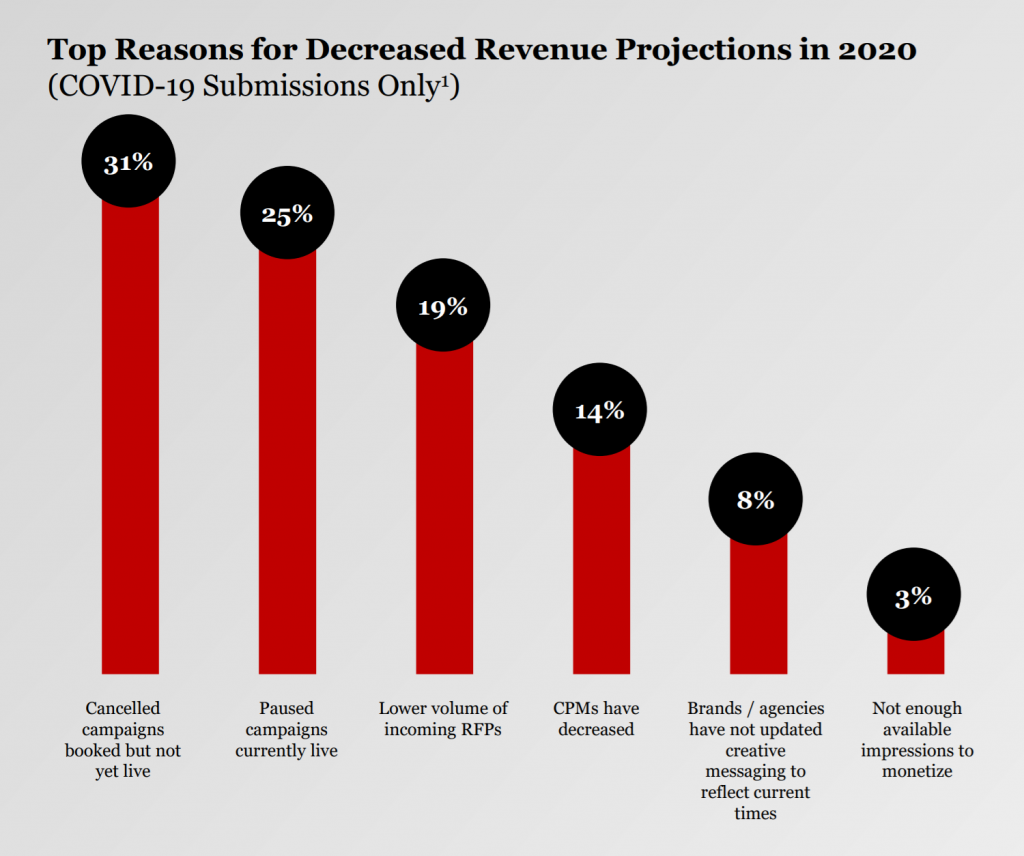
The report cited canceled or paused marketing campaigns as the main reasons mentioned by podcasters for the revenue slump in the first two quarters of 2020.
Other reasons include a lower volume of incoming RFPs, a decrease in CPMs, not enough available impressions to monetize, and the fact that brands and agencies have not updated creative messaging to reflect current times.
Before the virus outbreak, 2021 and 2022 podcast advertising revenues were forecast by IAB to grow 55% and 36% year-on-year, respectively.
2019 Podcast Ad Revenue
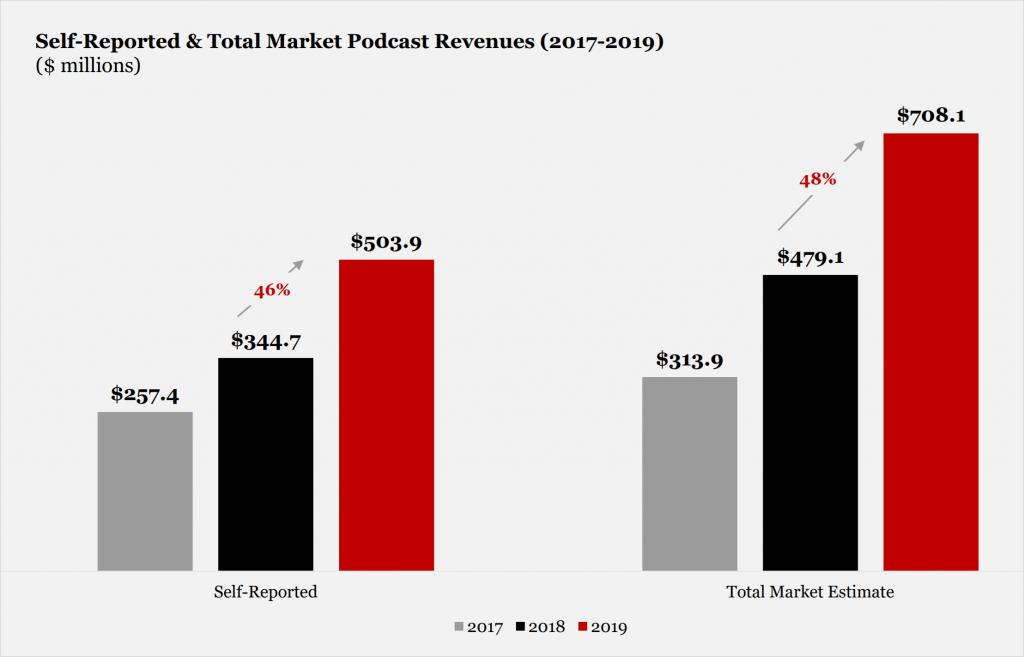
In 2019, podcasting ad revenue registered a growth of 48% compared with the previous year, hitting $708.1 million.
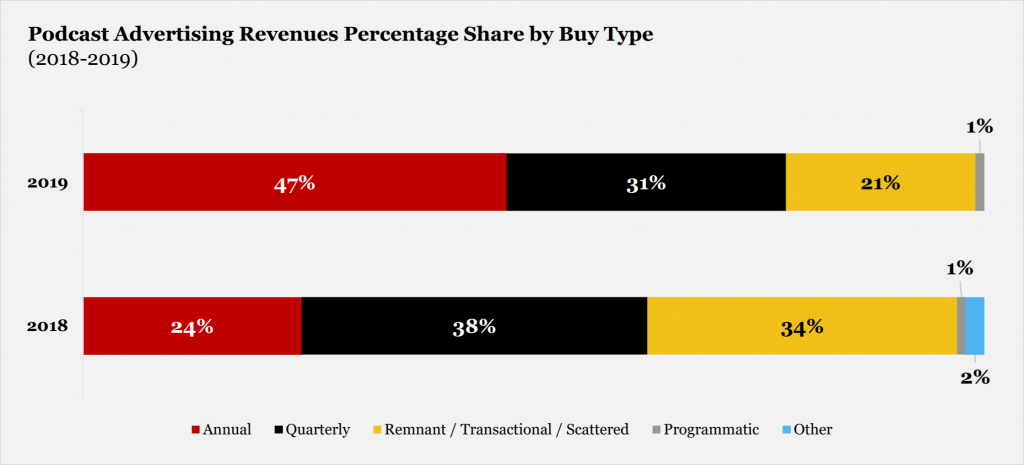
The IAB analysis shows podcasts are becoming a mainstay of the annual marketing plans of companies and that they are no longer considered just part of the so-called "scatter" purchasing strategy.
Scatter advertising refers to when brands and agencies buy inventory closer to the air date.
"Annual buys doubled to nearly half (47%) in 2019, while scattered advertising declined to 21% of overall buys," reads the report.
Leading Genres
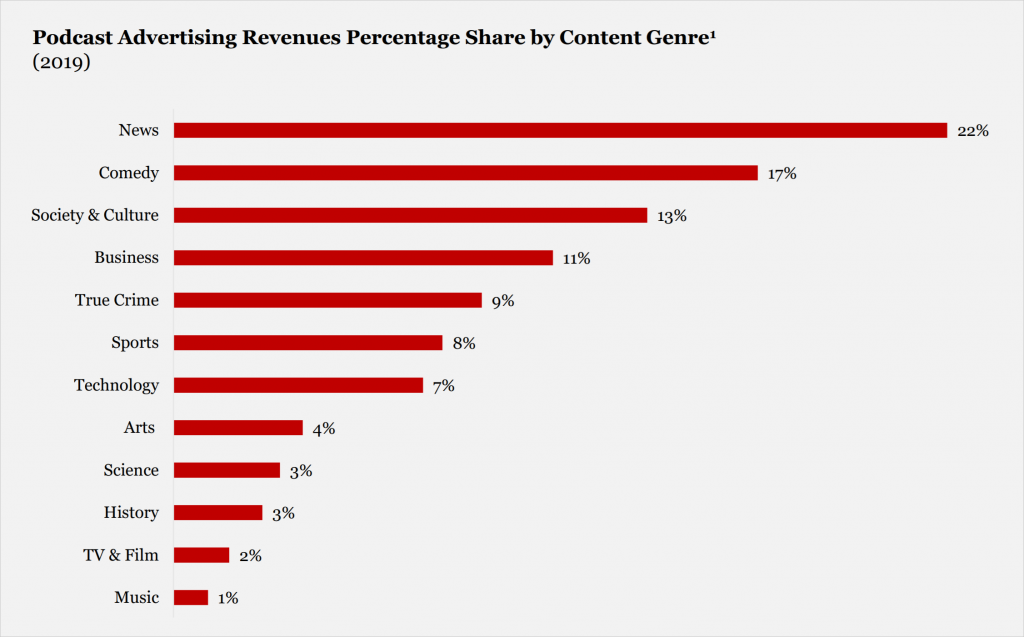
The news was the leading podcast content genre for U.S. podcast advertisers last year, capturing 22% of revenues.
It was followed by comedy (17%), society and culture (13%), business (11%), true crime (9%), sports (8%), technology (7%), arts (4%), science (3%), history (3%), TV and film (2%), and music (1%).
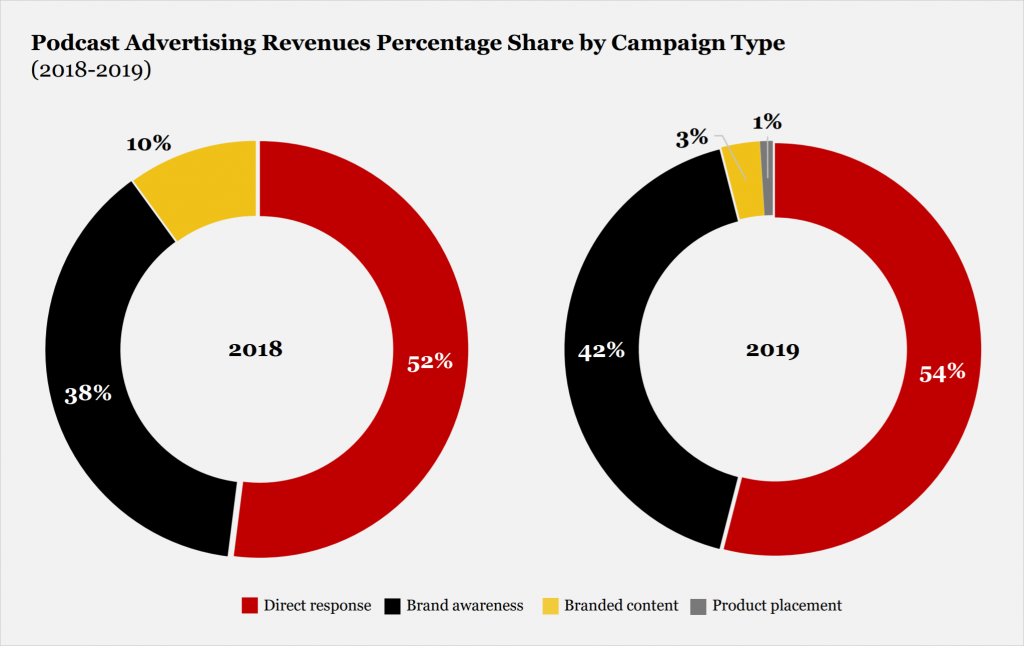
According to the report, direct response advertising represented 54% of podcast ad revenues.
Among advertiser categories, health and wellness was the largest direct-to-consumer segment followed by home and appliance.
In addition, the analysis indicates that podcast hosts are becoming trusted influencers with loyal communities. Host-read ads accounted for 66% of podcast advertising revenue in 2019.
Read more: Virus Tracker App Claims to Help Stall the Spread of COVID-19
Industry experts are unanimous that podcasting, like many other sectors, took a body blow thanks to the reduction in commuting time at the onset of the coronavirus.
However, they agree that it has retained its long-built momentum and is building its foundations to command a larger part of the media stage in the future.