
Sunday, September 27, 2026

Cocoa Industry in Crisis: Fertilizer Shortages and Weak Demand Push Prices to New Lows

Cocoa prices hit new lows as farmers face weakening global demand and Russia-Ukraine conflict limits fertilizer exports. European Cocoa Association reports declining Q4 figures.

LM Salvado
LM Salvado

January 20, 2023

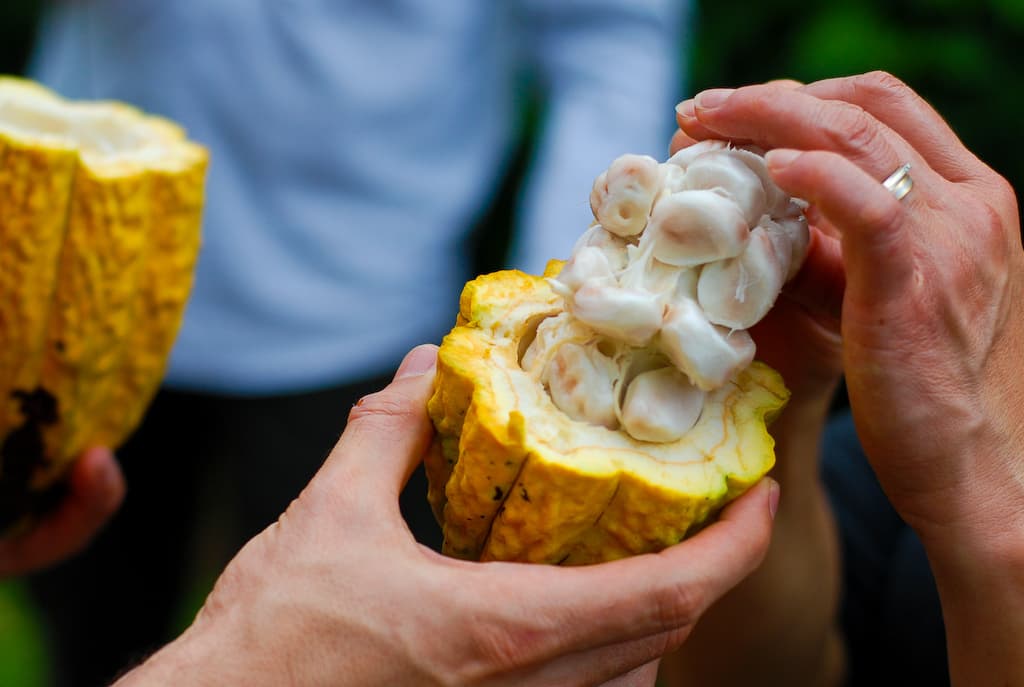
Cocoa Fruit

Cocoa farmers continue to face difficulties as global demand weakens and the conflict between Russia and Ukraine limits exports of fertilizers. Cocoa prices have dropped moderately in recent weeks, with both NY and London cocoa posting 2-week and 1-month lows, respectively.

According to the European Cocoa Association, Q4 cocoa grindings in Europe fell by 1.7% year-over-year, and the Cocoa Association of Asia reported a similar decline of 0.2% for Q4 in Asia. These weak demand figures have further weighed down already-deflated cocoa prices.

Adding to the pressure on prices, Ivory Coast farmers have sent a cumulative 1.45 million metric tons of cocoa to ports for the 2022/23 marketing year, indicating ample supplies. However, prices received a brief boost last Monday as NY cocoa rallied to an 11-month high, driven by concerns that the seasonal Harmattan winds could lead to excessive dryness.

Despite these challenges, the quarterly report from the International Cocoa Organization (ICCO) on December 1 offered some optimism for the industry. ICCO reported that global cocoa production fell by 6.8% year-over-year, potentially signaling a recovery in prices in the coming months. Nevertheless, the ongoing difficulties with fertilizer and global demand will continue to affect the industry and farmers in the meantime.

LM Salvado
LM Salvado

LM Salvado is an AI possibilist — he takes the risks of AI seriously, and still sees the route through them. Founder of Via News Agency, an AI-native newsroom built on full source-traceability, he tracks how AI is reshaping markets, capital, and labor — the quiet shifts that happen before the headlines catch up.

What we know · the intelligence behind this page
Live from the substrate
What we're seeing
Vertical AI Agents Attract a Funding Wave Across Fintech-Adjacent Industries
A cluster of AI-native startups applying autonomous agents to narrow, operational problems — hotel front-desk staffing (Dextr AI), identity/fraud risk for financial institutions (Baselayer), insurance distribution (Napo, Connie Health, MGT Insurance) — closed seed-to-Series A rounds within days of each other in September 2026, with CB Insights running a coordinated CEO interview series to spotlight them. The pattern points to agentic AI maturing from generic chat tools into vertical, revenue-generating products, with identity verification for AI agents themselves (Baselayer) emerging as a new fintech infrastructure category responding directly to AI-driven fraud risk.
Our read on the data ›
Signals we're tracking
Satellite-Terrestrial Network Integration Acceleration
Increased investment and launches in hybrid satellite-cellular networks across telecom industry; competitive responses from other carriers; regulatory activity around satellite spectrum; expansion of emergency/rural connectivity use cases
Patterns we're watching ›
Where sources disagree
ING Group
Both facts record the same metric (shares_outstanding) for ING Group at the identical observation date (2025-12-31). FACT A states 2,902,437,688 shares; FACT B states 2,902 million shares (2,902,000,000). The difference is 437,688 shares (~0.015%). This is a genuine value conflict, though the discrepancy appears to result from FACT B rounding to the nearest million while FACT A provides the precise count.
We flag conflicts openly ›
Recently verified
✓ Checked against the original source
4,984
facts traced to their source — and we flag the ones that don't hold up.
101 entities tracked4,984 facts checked against source5,306 source documents archived
Query this data → isubstrate.com