
Since the turn of the 21st Century, technological innovation has been moving at breakneck speed. Artificial intelligence and its applications in all manner of industries are proving to be the most revolutionary so far. This article focuses on the artificial intelligence outlook and with a particular interest in what the future holds in terms of benefits and risks.
Intelligent machines are popping up everywhere. Talk of intelligent machines taking over human jobs and posing a real security risk is abounding in media and professional circles. However, real interest in the technology and what it has to offer is increasing rapidly whose evidence is the rapidly expanding market. According to Global Market Outlook report for AI, the industry was worth $15.70 billion in 2017. The report further estimated that the market is expanding at 38.8% CAGR and, as such, it will reach $300.26 billion come 2026.
The gains for AI so far
AI, as a technology, gained a lot from the previous waves of technological revolutions, beginning from hardware, software, and then smartphones. As such, AI comes across as an amalgamation of these technologies but with a far-reaching impact.
So far, AI has demonstrated its capability to reduce the burden of performing tasks. For starters, AI is taking up a vital role in manufacturing and construction. A Global Artificial Intelligence in Construction Market Size, Status and Forecast 2018-2025 study shows that the technology is experiencing rising demand.
Interestingly, the technology is also assuming a vital role in almost every groundbreaking gadget and invention today. During this year’s consumer electronics show in Las Vegas, it was evident that AI is set to be the mother of all technologies in the future. Notably, as inventors exhibited self-driving cars, one could not help but notice that AI made the spine of the technology. Further, there were smart speakers which use AI and other smart home devices that make up the Internet of Things (IoT) niche.
Some benefits and risks humans face from AI
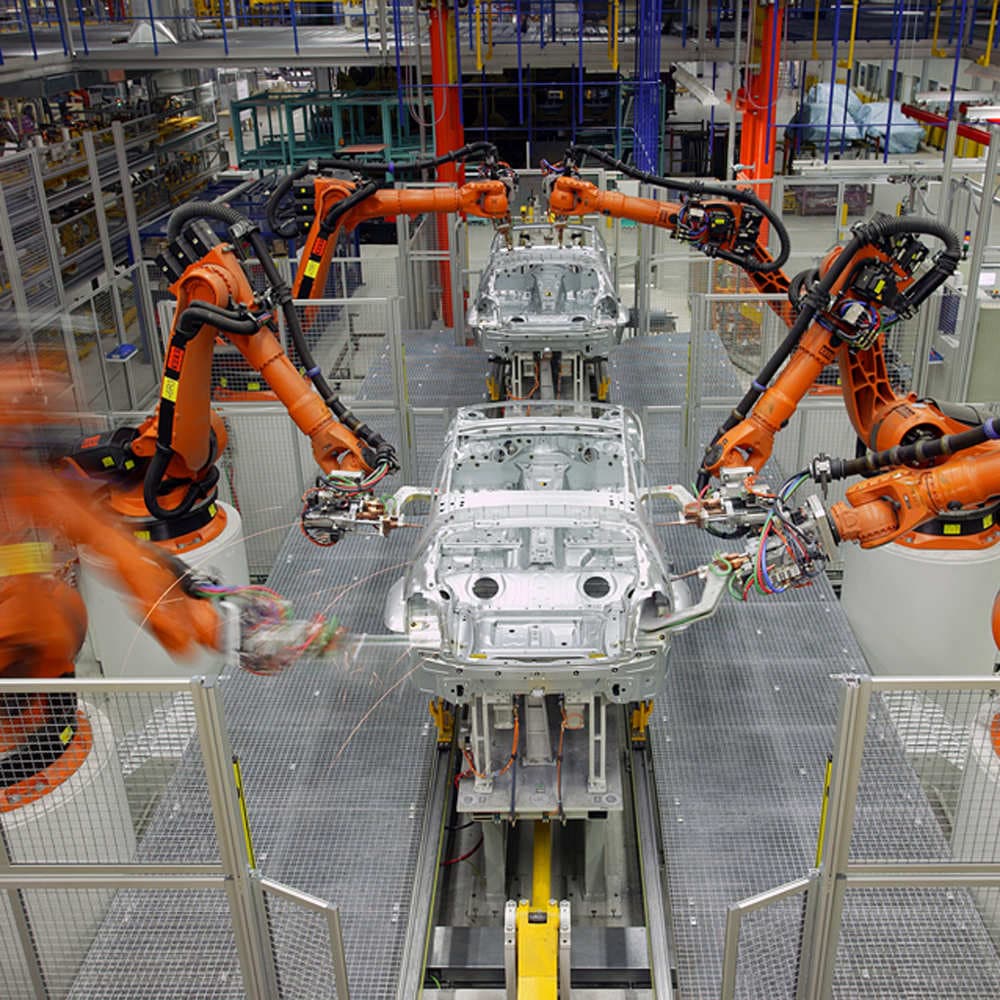
Like any other technological revolution, humans will reap both the positives and negatives of AI. Interestingly, AI is transforming manufacturing, for instance, in a way that firms are able to achieve efficiencies that were previously existent only in theories. According to a report, the adoption of AI in the manufacturing space is strong in the automobile industry followed by energy and power. This is driven by the huge benefits that come with automation and working with workers who do not need a rest.
Also, AI is proving very useful in augmenting and enhancing human skills in various sectors. Notably, AI-powered robots are coming in handy as helpers to doctors while performing surgery. Further, AI is finding use in sports where robots help players to optimize their performance.
With every improvement in what AI-powered robots can do comes the sad fact that humans will continue losing their jobs. Given what the machines are capable of in terms of output, employers are increasingly choosing them over human employees. A McKinsey Australia study showed that unemployment rate is bound to increase by 2.5% in Australia by 2030. This conclusion is based on the claim that close to 46% of jobs in the country will be automated by 2030.
Another key point of worry is security. AI poses real risks to humans as recognized in an open letter signed by personalities like Elon Musk, Noam Chomsky and Steve Hawkins among others. For instance, autonomous weapons have been cited as dangerous in that they can be used in assassinating people.
Emerging trends
Artificial intelligence looks like it is just getting started on what it has to offer. An important dynamic that is emerging is that AI is not, in actual sense, a replacement for humans. Notably, several projects are coming up which put humans and intelligent machines together such that efficiency is optimized.
There are significant emerging trends like the gradual departure from deep learning to genetic algorithms and machine reasoning. As such, there is an emergence of new generation AI-powered gadgets like portable AI devices that have personal applications like monitoring heart rate. Further, AI-powered virtual assistants are disrupting legacy industries like B2C interaction.