
Sunday, September 27, 2026

Why AI Doesn't Compare to Predecessor Tech Revolutions

Analysis of how the AI revolution differs from predecessor tech revolutions—the Agricultural, Industrial, and Printing revolutions—and how the economy has historically adapted to transformative change.

LM Salvado
LM Salvado

October 20, 2023

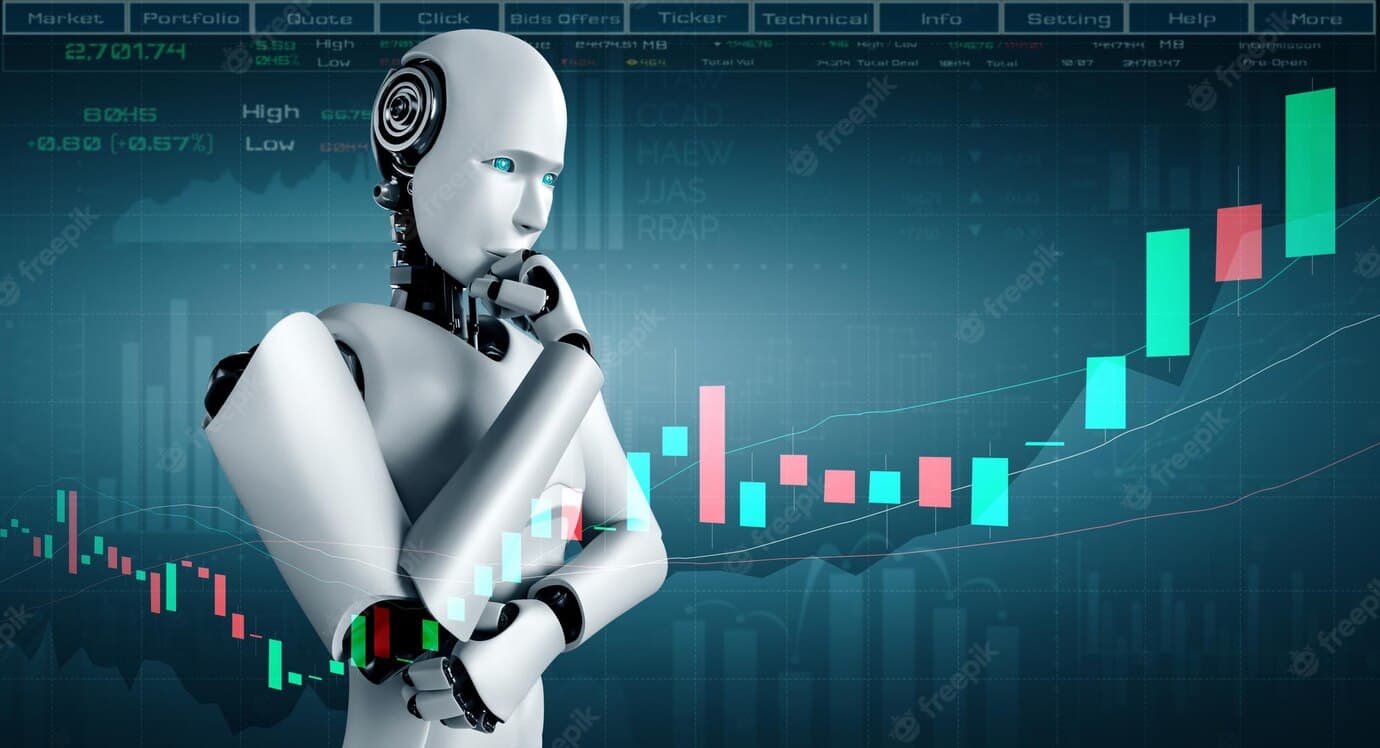
AI predicts stock market prices for tomorrow.

The economy always finds a way of adapting. The same pattern of reshaping and transformation of the economy happened throughout history.

The Agricultural Revolution allowed the domestication of animals and farming. The Industrial Revolution started the mass production of goods and the rise of factories. The Printing Revolution led to the proliferation of books and newspapers. The Digital Revolution gave birth to IT, software development, and e-commerce industries. The AI revolution is giving birth to robotics, data analysis, and technology singularity, which is when machines can create and improve their designs faster than humans.

The same patterns of past revolutionary technologies are also emerging for AI. But is there a difference?

AI is substituting repetitive and routine jobs with robots. AI is also surprisingly replacing white-collar workers like call center agents, lawyers, accountants, writers, and artists and doing it better than humans.

So, the question is: Will the AI Industry Revolution differ from other technological revolutions?

Previous technological revolutions, like the Agricultural, Printing, Industrial, and Digital revolutions, were driven by new and improved tools.

That’s why the AI revolution may differ from all previous technological revolutions. AI can result in a technological singularity, where machines can create and improve their designs faster than humans. So AI isn’t a new tool, it’s a creator of tools. That’s a game-changer.

These are fascinating times we’re living in.

Categories

LM Salvado
LM Salvado

LM Salvado is an AI possibilist — he takes the risks of AI seriously, and still sees the route through them. Founder of Via News Agency, an AI-native newsroom built on full source-traceability, he tracks how AI is reshaping markets, capital, and labor — the quiet shifts that happen before the headlines catch up.

What we know · the intelligence behind this page
Live from the substrate
What we're seeing
Vertical AI Agents Attract a Funding Wave Across Fintech-Adjacent Industries
A cluster of AI-native startups applying autonomous agents to narrow, operational problems — hotel front-desk staffing (Dextr AI), identity/fraud risk for financial institutions (Baselayer), insurance distribution (Napo, Connie Health, MGT Insurance) — closed seed-to-Series A rounds within days of each other in September 2026, with CB Insights running a coordinated CEO interview series to spotlight them. The pattern points to agentic AI maturing from generic chat tools into vertical, revenue-generating products, with identity verification for AI agents themselves (Baselayer) emerging as a new fintech infrastructure category responding directly to AI-driven fraud risk.
Our read on the data ›
Signals we're tracking
Satellite-Terrestrial Network Integration Acceleration
Increased investment and launches in hybrid satellite-cellular networks across telecom industry; competitive responses from other carriers; regulatory activity around satellite spectrum; expansion of emergency/rural connectivity use cases
Patterns we're watching ›
Where sources disagree
ING Group
Both facts record the same metric (shares_outstanding) for ING Group at the identical observation date (2025-12-31). FACT A states 2,902,437,688 shares; FACT B states 2,902 million shares (2,902,000,000). The difference is 437,688 shares (~0.015%). This is a genuine value conflict, though the discrepancy appears to result from FACT B rounding to the nearest million while FACT A provides the precise count.
We flag conflicts openly ›
Recently verified
✓ Checked against the original source
4,984
facts traced to their source — and we flag the ones that don't hold up.
101 entities tracked4,984 facts checked against source5,306 source documents archived
Query this data → isubstrate.com