
South Sudan Oil Pollution: Parliament Issues Summons to Country's Minister of Petroleum and Mining
Joseph Oduha
August 3, 2018
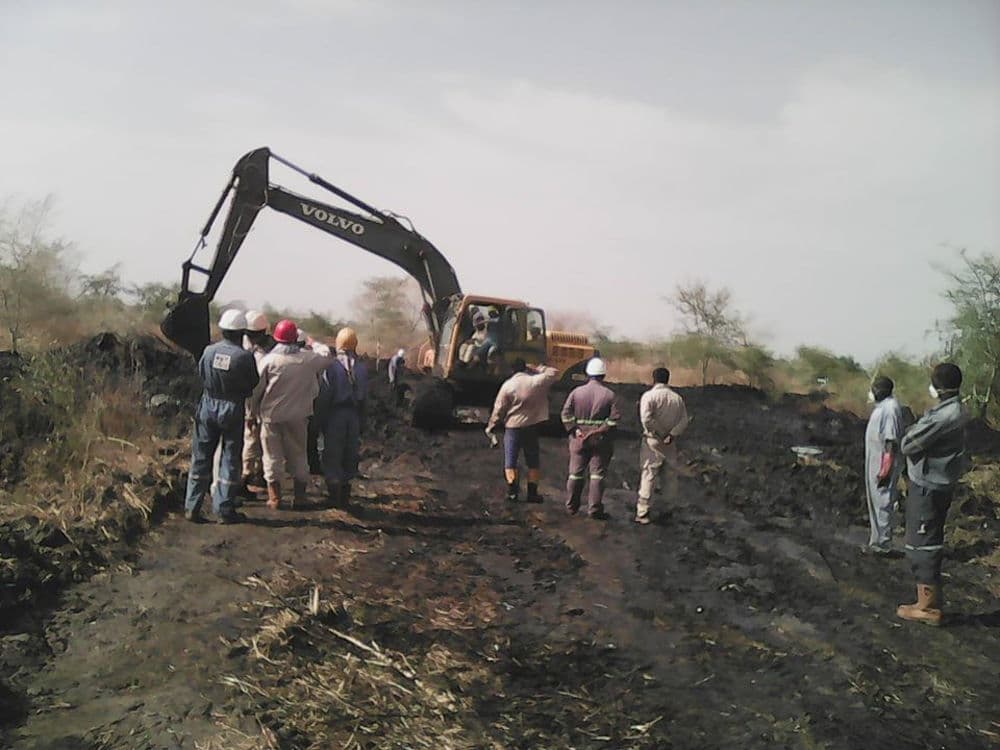
JUBA, South Sudan (ViaNews) - For failure to report on oil pollution's devastation of the country, the South Sudanese Parliament issues summons to country's Minister of Petroleum and Mining and acknowledged that oil pollution has caused flight of more than 500,000 people in Upper Nile region alone.
The Petroleum Committee of South Sudan's National Legislative Assembly has issued a summons to Ezekiel Lul Gatkuoth, the country's minister of petroleum and mining.
The summons orders Gatkuoth to appear before the committee, and to detail “the damages inflicted by oil pollution. It is this pollution that has caused more than 500,000 residents of oil-producing areas in the Upper Nile region to flee,” states James Lual Atak, the MP heading the Committee.
Atak adds: “In March, we instructed Minister Gatkuoth to dispatch independent investigators to these oil polluted areas. They were to compile their findings within two months' time. These, in turn, were to form the basis for the taking of remedial actions. Four months have since elapsed, and we have yet to hear anything from the minister about this investigation,” states Mr. Atak.
“So we decided to issue this summons,” concludes Mr. Atak.
As Mr. Atak reports, this issuance has been given great urgency by the outcries by the residents of the oil-producing regions, who are demanding action on the part of the South Sudanese government to protect them from “irresponsible oil companies”.
That such action is needed has been confirmed by none other than Salva Kiir, South Sudan's president.
Read: South Sudan Oil Contamination: “Among the Highest in the World,” Study Finds
In a foreword to the First Environmental Report and Outlook for South Sudan, which was published in May 2018 by the United Nations Environment Programme (UNEP) on behalf of the government of South Sudan, Kiir wrote that “the lack of environmental standards and guidelines to safeguard the exploration and exploitation in the extractive industry has led to pollution in the oil fields and in the surrounding areas.”
Kiir cited the environmental crisis as being particularly dire in the former Unity State. Kiir added:
“This trend needs to be checked through the formulation of environmental policies, standards and guidelines, and enforcement of these instruments,” he said.
The investigation of South Sudan's oil pollution crisis has been spearheaded by the Germany-based Sign of Hope, an NGO that has long been active in the country. The organization's investigation has focused on the Thar Jath oil field.
“There is a direct link between the contamination of the people and the activities of the petroleum industry working in this area,” states Klaus Stieglitz, the Deputy Chairperson of Sign of Hope.
Tired of having their cries for alleviation left unheeded, South Sudanese in oil areas have now started to issue threats to undertake “civil action” against the oil companies behind the contamination of their homelands.
These cries are finding widespread support among the country's scientists.
Read: Leading Rights Groups Reveal How a South Sudan Oil Company Plays a Key Role in Prolonging Conflict
Dr. James Okuk, a Juba-based oil analyst, has called upon the country's government to declare a state of environmental crisis in South Sudan's oil-rich regions and to follow this up with the provision of humanitarian assistance to the affected population.