
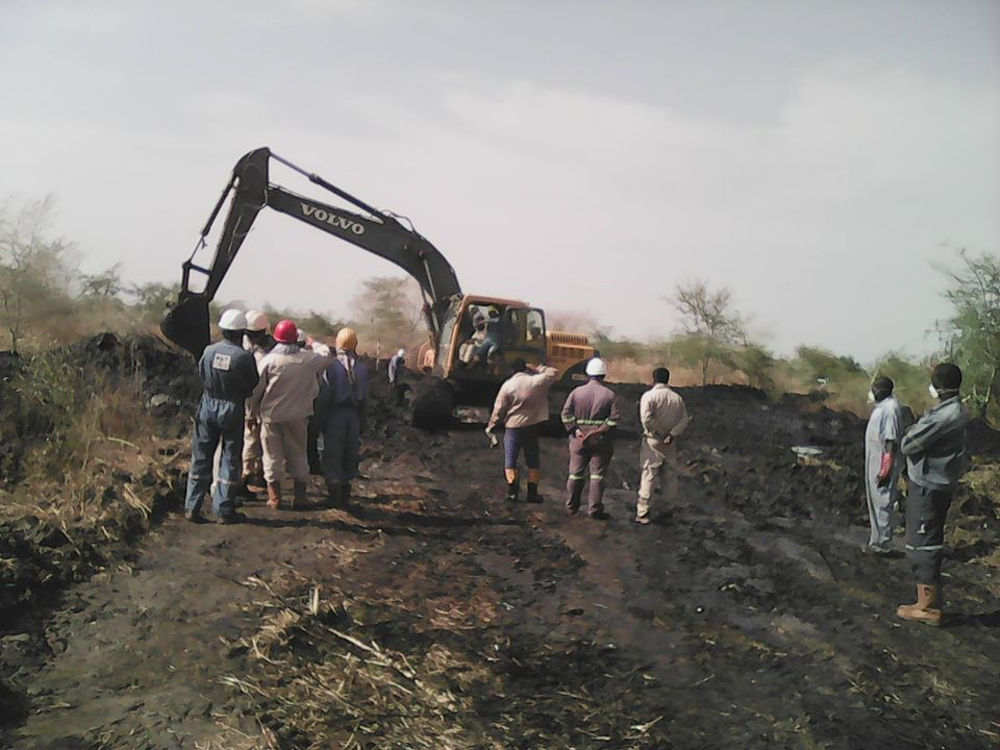
 Oil workers attempting to contain the spill. Photo by: Nile Institute of Environmental Health.[/caption]
The oil spill resulted from a bursting in December 2017 of a pipeline connecting Paloch and Adar, home to two of South Sudan’s most productive oil fields. The fields’ operators patched the pipeline and made a half-hearted attempt to bury and cover the spilled crude.
The seasonal rainfall gripping South Sudan has transformed the oil residues into a viscously flowing mixture that is now making its poisonous way through the villages and farmlands. Alarmed at the loss of their fields and of their potable water, local communities are organizing to force the oil companies to take the measures so urgently need to quell this flood of contaminants.
Leading Rights Groups Reveal How a South Sudan Oil Company Plays a Key Role in Prolonging Conflict
Oil workers attempting to contain the spill. Photo by: Nile Institute of Environmental Health.[/caption]
The oil spill resulted from a bursting in December 2017 of a pipeline connecting Paloch and Adar, home to two of South Sudan’s most productive oil fields. The fields’ operators patched the pipeline and made a half-hearted attempt to bury and cover the spilled crude.
The seasonal rainfall gripping South Sudan has transformed the oil residues into a viscously flowing mixture that is now making its poisonous way through the villages and farmlands. Alarmed at the loss of their fields and of their potable water, local communities are organizing to force the oil companies to take the measures so urgently need to quell this flood of contaminants.
Leading Rights Groups Reveal How a South Sudan Oil Company Plays a Key Role in Prolonging ConflictOil-Mudslides Flooding South Sudan
Terry Swartzberg
May 28, 2018
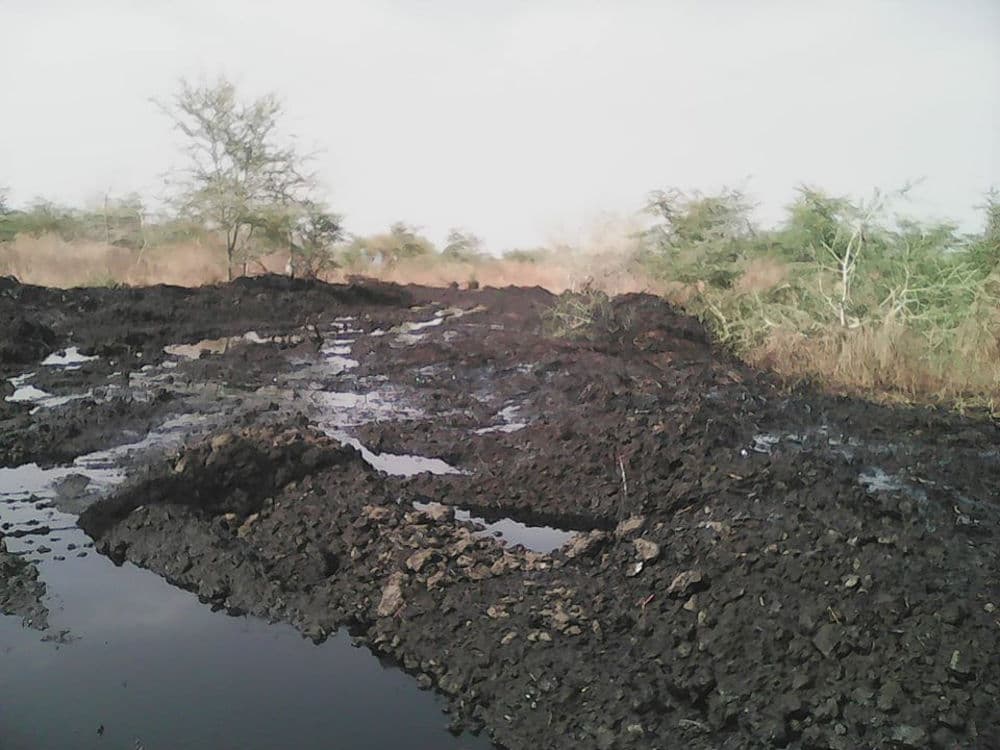
Trigged by an oil spill and subsequent heavy rainfall, waves of oil and contaminants-soaked mud are rolling over South Sudanese villages and farmlands, reports the Nile Institute of Environmental Health (NIE-Health), one of the country’s leading environmental monitoring and reporting institutions.
[caption id="attachment_4243" align="aligncenter" width="1000"] Oil workers attempting to contain the spill. Photo by: Nile Institute of Environmental Health.[/caption]
The oil spill resulted from a bursting in December 2017 of a pipeline connecting Paloch and Adar, home to two of South Sudan’s most productive oil fields. The fields’ operators patched the pipeline and made a half-hearted attempt to bury and cover the spilled crude.
The seasonal rainfall gripping South Sudan has transformed the oil residues into a viscously flowing mixture that is now making its poisonous way through the villages and farmlands. Alarmed at the loss of their fields and of their potable water, local communities are organizing to force the oil companies to take the measures so urgently need to quell this flood of contaminants.
Leading Rights Groups Reveal How a South Sudan Oil Company Plays a Key Role in Prolonging Conflict
Oil workers attempting to contain the spill. Photo by: Nile Institute of Environmental Health.[/caption]
The oil spill resulted from a bursting in December 2017 of a pipeline connecting Paloch and Adar, home to two of South Sudan’s most productive oil fields. The fields’ operators patched the pipeline and made a half-hearted attempt to bury and cover the spilled crude.
The seasonal rainfall gripping South Sudan has transformed the oil residues into a viscously flowing mixture that is now making its poisonous way through the villages and farmlands. Alarmed at the loss of their fields and of their potable water, local communities are organizing to force the oil companies to take the measures so urgently need to quell this flood of contaminants.
Leading Rights Groups Reveal How a South Sudan Oil Company Plays a Key Role in Prolonging Conflict
Oil workers attempting to contain the spill. Photo by: Nile Institute of Environmental Health.[/caption]
The oil spill resulted from a bursting in December 2017 of a pipeline connecting Paloch and Adar, home to two of South Sudan’s most productive oil fields. The fields’ operators patched the pipeline and made a half-hearted attempt to bury and cover the spilled crude.
The seasonal rainfall gripping South Sudan has transformed the oil residues into a viscously flowing mixture that is now making its poisonous way through the villages and farmlands. Alarmed at the loss of their fields and of their potable water, local communities are organizing to force the oil companies to take the measures so urgently need to quell this flood of contaminants.
Leading Rights Groups Reveal How a South Sudan Oil Company Plays a Key Role in Prolonging Conflict