
 Ethiopia Renaissance dam (Fekadu Nigani image)[/caption]
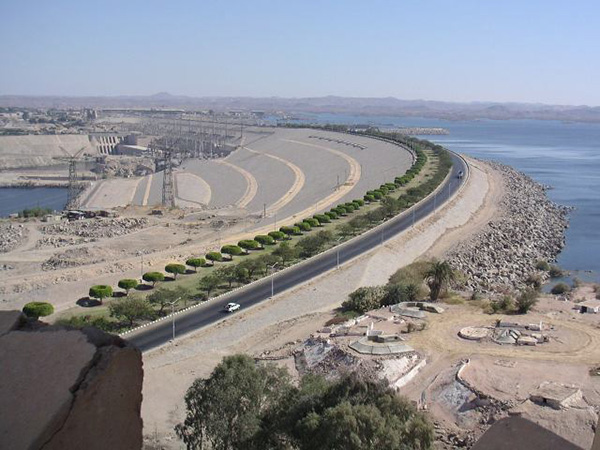
Egypt uses most of the Nile River water it receives each year and relies on it to generate electricity through the Aswan High Dam. The time it will take to fill Ethiopia’s reservoir will decrease the water flow to Egypt by over 25% and will cut the electricity created by the Aswan High Dam by about 30%. This can have major consequences considering Egypt’s energy crisis. For years Egypt has suffered from power outages especially during summer. Now with the flotation of the pound the prices of electricity and petroleum are rising each year. A decrease in the electricity generated would certainly add to the problem.
Agriculture is another issue to consider. About 90% of Egyptians live along the Nile and all agricultural land is along the Nile as well. A reduction in water would significantly harm farming and agriculture further adding stress to the Egyptian economy.
It seems that the GERD might not even be that beneficial to Ethiopia. According to Asfaw Beyene, a mechanical engineer at San Diego State University, the promised 6,000 megawatts to be generated are an exaggeration and would only be feasible during peak flow periods. He says that even a 2,000 megawatt prediction may have been “a little excessive.”
Fresh water is a major issue for several countries and conflicts are predicted to arise over it in the future. Countries along the Nile however were never threatened by this issue until Egypt and Sudan had to face the fact that Ethiopia is building a dam. So far there have been no formal agreements between both countries on how to utilize the dam without harming Egypt’s share of the river. Previous regimes, under presidents Hosni Mubarak and Mohammed Morsi, in Egypt have talked about military action but the current president hasn’t spoken of such things.
As tensions keep rising and the GERD nears completion Egypt will really start to face the reality. If no formal diplomatic agreement is reached between both countries by then, no one knows what escalation could lead to.
Ethiopia Renaissance dam (Fekadu Nigani image)[/caption]
Egypt uses most of the Nile River water it receives each year and relies on it to generate electricity through the Aswan High Dam. The time it will take to fill Ethiopia’s reservoir will decrease the water flow to Egypt by over 25% and will cut the electricity created by the Aswan High Dam by about 30%. This can have major consequences considering Egypt’s energy crisis. For years Egypt has suffered from power outages especially during summer. Now with the flotation of the pound the prices of electricity and petroleum are rising each year. A decrease in the electricity generated would certainly add to the problem.
Agriculture is another issue to consider. About 90% of Egyptians live along the Nile and all agricultural land is along the Nile as well. A reduction in water would significantly harm farming and agriculture further adding stress to the Egyptian economy.
It seems that the GERD might not even be that beneficial to Ethiopia. According to Asfaw Beyene, a mechanical engineer at San Diego State University, the promised 6,000 megawatts to be generated are an exaggeration and would only be feasible during peak flow periods. He says that even a 2,000 megawatt prediction may have been “a little excessive.”
Fresh water is a major issue for several countries and conflicts are predicted to arise over it in the future. Countries along the Nile however were never threatened by this issue until Egypt and Sudan had to face the fact that Ethiopia is building a dam. So far there have been no formal agreements between both countries on how to utilize the dam without harming Egypt’s share of the river. Previous regimes, under presidents Hosni Mubarak and Mohammed Morsi, in Egypt have talked about military action but the current president hasn’t spoken of such things.
As tensions keep rising and the GERD nears completion Egypt will really start to face the reality. If no formal diplomatic agreement is reached between both countries by then, no one knows what escalation could lead to.Egypt-Ethiopia Dam Conflict
Amier Rashed
August 7, 2017
CAIRO, Egypt (Vianews) - The Nile River is the beating heart of all the nations it flows through. It starts in Burundi and finally passes through Egypt to end in the Mediterranean Sea running a total distance of 6,853 km making it the second longest river in the world. Countries have used the river for agriculture, generating electricity, and fishing making it one of the cornerstones of the economies and lives of these countries. A new conflict has emerged, however; between Ethiopia and Egypt as the former is building a dam that will reduce the flow of water towards Egypt and Sudan.
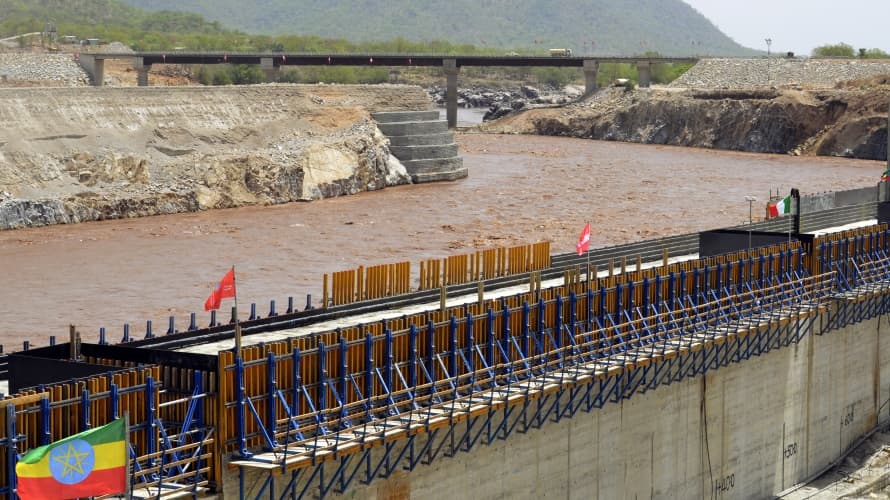
The dam in question is the Grand Ethiopian Renaissance Dam (GERD). According to Ethiopia the main purpose of the dam is to generate electricity for a population where three quarters of the people don’t have access to electricity. The predicted amount of electricity to be generated as estimated by the Ethiopian government is 6,000 megawatts. It will also provide a surplus of electricity that can sold to nearby countries which will bring in foreign currency to boost the Ethiopian economy.
While this seems like a good idea for Ethiopia it might be catastrophic for Sudan and Egypt. The main issue is that the Ethiopian government intends to create a reservoir of Nile River water. The size of this reservoir will be twice the size of Hoover Dam’s Lake Mead which is the largest reservoir in the U.S. It could take up to 15 years in order to fill this reservoir which would greatly diminish the flow of water to Egypt.
[caption id="attachment_1778" align="aligncenter" width="600"] Ethiopia Renaissance dam (Fekadu Nigani image)[/caption]
Egypt uses most of the Nile River water it receives each year and relies on it to generate electricity through the Aswan High Dam. The time it will take to fill Ethiopia’s reservoir will decrease the water flow to Egypt by over 25% and will cut the electricity created by the Aswan High Dam by about 30%. This can have major consequences considering Egypt’s energy crisis. For years Egypt has suffered from power outages especially during summer. Now with the flotation of the pound the prices of electricity and petroleum are rising each year. A decrease in the electricity generated would certainly add to the problem.
Agriculture is another issue to consider. About 90% of Egyptians live along the Nile and all agricultural land is along the Nile as well. A reduction in water would significantly harm farming and agriculture further adding stress to the Egyptian economy.
It seems that the GERD might not even be that beneficial to Ethiopia. According to Asfaw Beyene, a mechanical engineer at San Diego State University, the promised 6,000 megawatts to be generated are an exaggeration and would only be feasible during peak flow periods. He says that even a 2,000 megawatt prediction may have been “a little excessive.”
Fresh water is a major issue for several countries and conflicts are predicted to arise over it in the future. Countries along the Nile however were never threatened by this issue until Egypt and Sudan had to face the fact that Ethiopia is building a dam. So far there have been no formal agreements between both countries on how to utilize the dam without harming Egypt’s share of the river. Previous regimes, under presidents Hosni Mubarak and Mohammed Morsi, in Egypt have talked about military action but the current president hasn’t spoken of such things.
As tensions keep rising and the GERD nears completion Egypt will really start to face the reality. If no formal diplomatic agreement is reached between both countries by then, no one knows what escalation could lead to.
Ethiopia Renaissance dam (Fekadu Nigani image)[/caption]
Egypt uses most of the Nile River water it receives each year and relies on it to generate electricity through the Aswan High Dam. The time it will take to fill Ethiopia’s reservoir will decrease the water flow to Egypt by over 25% and will cut the electricity created by the Aswan High Dam by about 30%. This can have major consequences considering Egypt’s energy crisis. For years Egypt has suffered from power outages especially during summer. Now with the flotation of the pound the prices of electricity and petroleum are rising each year. A decrease in the electricity generated would certainly add to the problem.
Agriculture is another issue to consider. About 90% of Egyptians live along the Nile and all agricultural land is along the Nile as well. A reduction in water would significantly harm farming and agriculture further adding stress to the Egyptian economy.
It seems that the GERD might not even be that beneficial to Ethiopia. According to Asfaw Beyene, a mechanical engineer at San Diego State University, the promised 6,000 megawatts to be generated are an exaggeration and would only be feasible during peak flow periods. He says that even a 2,000 megawatt prediction may have been “a little excessive.”
Fresh water is a major issue for several countries and conflicts are predicted to arise over it in the future. Countries along the Nile however were never threatened by this issue until Egypt and Sudan had to face the fact that Ethiopia is building a dam. So far there have been no formal agreements between both countries on how to utilize the dam without harming Egypt’s share of the river. Previous regimes, under presidents Hosni Mubarak and Mohammed Morsi, in Egypt have talked about military action but the current president hasn’t spoken of such things.
As tensions keep rising and the GERD nears completion Egypt will really start to face the reality. If no formal diplomatic agreement is reached between both countries by then, no one knows what escalation could lead to.
Ethiopia Renaissance dam (Fekadu Nigani image)[/caption]
Egypt uses most of the Nile River water it receives each year and relies on it to generate electricity through the Aswan High Dam. The time it will take to fill Ethiopia’s reservoir will decrease the water flow to Egypt by over 25% and will cut the electricity created by the Aswan High Dam by about 30%. This can have major consequences considering Egypt’s energy crisis. For years Egypt has suffered from power outages especially during summer. Now with the flotation of the pound the prices of electricity and petroleum are rising each year. A decrease in the electricity generated would certainly add to the problem.
Agriculture is another issue to consider. About 90% of Egyptians live along the Nile and all agricultural land is along the Nile as well. A reduction in water would significantly harm farming and agriculture further adding stress to the Egyptian economy.
It seems that the GERD might not even be that beneficial to Ethiopia. According to Asfaw Beyene, a mechanical engineer at San Diego State University, the promised 6,000 megawatts to be generated are an exaggeration and would only be feasible during peak flow periods. He says that even a 2,000 megawatt prediction may have been “a little excessive.”
Fresh water is a major issue for several countries and conflicts are predicted to arise over it in the future. Countries along the Nile however were never threatened by this issue until Egypt and Sudan had to face the fact that Ethiopia is building a dam. So far there have been no formal agreements between both countries on how to utilize the dam without harming Egypt’s share of the river. Previous regimes, under presidents Hosni Mubarak and Mohammed Morsi, in Egypt have talked about military action but the current president hasn’t spoken of such things.
As tensions keep rising and the GERD nears completion Egypt will really start to face the reality. If no formal diplomatic agreement is reached between both countries by then, no one knows what escalation could lead to.