
 Bunia's General Hospital, Democratic Republic of the Congo’s Ituri province. Photo by: UNHCR/Natalia Micevic[/caption]
The humanitarian challenges are enormous, with hospitals, schools, and other key infrastructure having been completely destroyed. “Addressing the root causes is important. With simmering tensions underneath the surface, there is a risk for a flashpoint [of violence] when the elections come around,” said Yaxley.
For both returnees and those at displacement sites, UNHCR is providing emergency and transition shelter kits to replace houses that have been damaged or destroyed. They are also providing cash grants to meet immediate and critical needs, with priority being given to the most vulnerable. Some 1,500 families are set to receive an average of US$210, depending on the family size. UNHCR is also scaling up community engagement to improve social cohesion amongst different ethnic groups.
“UNHCR’s efforts continue to be hampered by severe and critical underfunding. The humanitarian appeal for the Democratic Republic of Congo continues to be among the least-funded in the world. To date, UNHCR has received just 17 per cent of the US$201 million requested to provide protection, life-saving aid, and assistance inside Democratic Republic of Congo,” said UNHCR in Geneva.
UNHCR is sounding the alarm on Congo. It is asking the international community to come forward with further funding, as urgent action needs to be taken to address the immediate, pressing needs of those who have been affected by the violence.
Bunia's General Hospital, Democratic Republic of the Congo’s Ituri province. Photo by: UNHCR/Natalia Micevic[/caption]
The humanitarian challenges are enormous, with hospitals, schools, and other key infrastructure having been completely destroyed. “Addressing the root causes is important. With simmering tensions underneath the surface, there is a risk for a flashpoint [of violence] when the elections come around,” said Yaxley.
For both returnees and those at displacement sites, UNHCR is providing emergency and transition shelter kits to replace houses that have been damaged or destroyed. They are also providing cash grants to meet immediate and critical needs, with priority being given to the most vulnerable. Some 1,500 families are set to receive an average of US$210, depending on the family size. UNHCR is also scaling up community engagement to improve social cohesion amongst different ethnic groups.
“UNHCR’s efforts continue to be hampered by severe and critical underfunding. The humanitarian appeal for the Democratic Republic of Congo continues to be among the least-funded in the world. To date, UNHCR has received just 17 per cent of the US$201 million requested to provide protection, life-saving aid, and assistance inside Democratic Republic of Congo,” said UNHCR in Geneva.
UNHCR is sounding the alarm on Congo. It is asking the international community to come forward with further funding, as urgent action needs to be taken to address the immediate, pressing needs of those who have been affected by the violence.Sounding the alarm on Congo: Ituri violence creating desperation
Kimberley Evans
July 27, 2018

GENEVA, Switzerland (ViaNews) - After months of conflict between the Hema and Lendu ethnic groups in eastern DR Congo’s Ituri region, UNHCR is sounding the alarm.
“We really sounded the alarm last week. People are finding pieces of neighbors bodies. The barbaric acts of ISIS are surpassed here. ISIS were using guns. In Ituri they are using blunt instruments,” said UNHCR spokesperson Charlie Yaxley, speaking to VIA news.
A UNHCR team has recently been able to obtain access to the Ituri area. In all, around 350,000 people are estimated to have fled the violence. Those who have returned so far are in many cases finding that their villages and homes have been reduced to ash – making them displaced again.
The refugee camps in Uganda are also filling up with displaced Congolese. Particularly affected are children and other vulnerable populations, like the sick and elderly. UNHCR is particularly concerned about the number of children suffering from severe acute malnutrition, who are in need of urgent medical care.
UNHCR is experiencing what is known as donor underfunding fatigue. “There’s public apathy towards Sub-Saharan Africa, as the whole region suffers from recurring violence. Think of South Sudan, Burundi, and Somalia. 'There’s violence again in Congo' is the usual iteration. But Ituri has been fairly calm, until now,” says Yaxley.
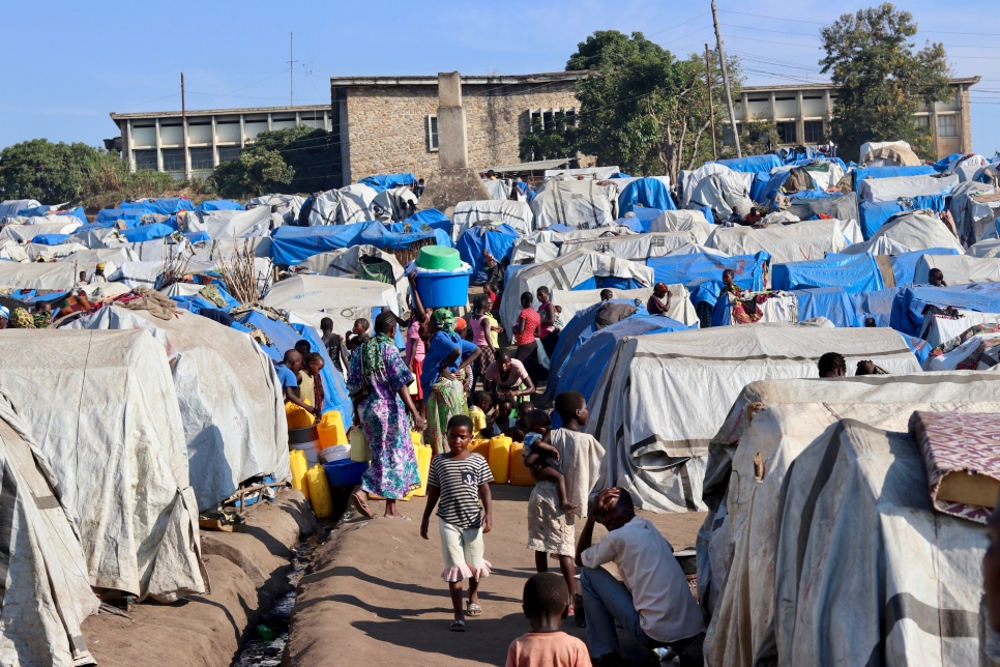
In the camps, Conditions are grim, as in many places, there is no clean water, no access to healthcare and inadequate sanitation facilities, leading to cholera risks.
[caption id="attachment_4779" align="aligncenter" width="1000"] Bunia's General Hospital, Democratic Republic of the Congo’s Ituri province. Photo by: UNHCR/Natalia Micevic[/caption]
The humanitarian challenges are enormous, with hospitals, schools, and other key infrastructure having been completely destroyed. “Addressing the root causes is important. With simmering tensions underneath the surface, there is a risk for a flashpoint [of violence] when the elections come around,” said Yaxley.
For both returnees and those at displacement sites, UNHCR is providing emergency and transition shelter kits to replace houses that have been damaged or destroyed. They are also providing cash grants to meet immediate and critical needs, with priority being given to the most vulnerable. Some 1,500 families are set to receive an average of US$210, depending on the family size. UNHCR is also scaling up community engagement to improve social cohesion amongst different ethnic groups.
“UNHCR’s efforts continue to be hampered by severe and critical underfunding. The humanitarian appeal for the Democratic Republic of Congo continues to be among the least-funded in the world. To date, UNHCR has received just 17 per cent of the US$201 million requested to provide protection, life-saving aid, and assistance inside Democratic Republic of Congo,” said UNHCR in Geneva.
UNHCR is sounding the alarm on Congo. It is asking the international community to come forward with further funding, as urgent action needs to be taken to address the immediate, pressing needs of those who have been affected by the violence.
Bunia's General Hospital, Democratic Republic of the Congo’s Ituri province. Photo by: UNHCR/Natalia Micevic[/caption]
The humanitarian challenges are enormous, with hospitals, schools, and other key infrastructure having been completely destroyed. “Addressing the root causes is important. With simmering tensions underneath the surface, there is a risk for a flashpoint [of violence] when the elections come around,” said Yaxley.
For both returnees and those at displacement sites, UNHCR is providing emergency and transition shelter kits to replace houses that have been damaged or destroyed. They are also providing cash grants to meet immediate and critical needs, with priority being given to the most vulnerable. Some 1,500 families are set to receive an average of US$210, depending on the family size. UNHCR is also scaling up community engagement to improve social cohesion amongst different ethnic groups.
“UNHCR’s efforts continue to be hampered by severe and critical underfunding. The humanitarian appeal for the Democratic Republic of Congo continues to be among the least-funded in the world. To date, UNHCR has received just 17 per cent of the US$201 million requested to provide protection, life-saving aid, and assistance inside Democratic Republic of Congo,” said UNHCR in Geneva.
UNHCR is sounding the alarm on Congo. It is asking the international community to come forward with further funding, as urgent action needs to be taken to address the immediate, pressing needs of those who have been affected by the violence.
Bunia's General Hospital, Democratic Republic of the Congo’s Ituri province. Photo by: UNHCR/Natalia Micevic[/caption]
The humanitarian challenges are enormous, with hospitals, schools, and other key infrastructure having been completely destroyed. “Addressing the root causes is important. With simmering tensions underneath the surface, there is a risk for a flashpoint [of violence] when the elections come around,” said Yaxley.
For both returnees and those at displacement sites, UNHCR is providing emergency and transition shelter kits to replace houses that have been damaged or destroyed. They are also providing cash grants to meet immediate and critical needs, with priority being given to the most vulnerable. Some 1,500 families are set to receive an average of US$210, depending on the family size. UNHCR is also scaling up community engagement to improve social cohesion amongst different ethnic groups.
“UNHCR’s efforts continue to be hampered by severe and critical underfunding. The humanitarian appeal for the Democratic Republic of Congo continues to be among the least-funded in the world. To date, UNHCR has received just 17 per cent of the US$201 million requested to provide protection, life-saving aid, and assistance inside Democratic Republic of Congo,” said UNHCR in Geneva.
UNHCR is sounding the alarm on Congo. It is asking the international community to come forward with further funding, as urgent action needs to be taken to address the immediate, pressing needs of those who have been affected by the violence.